Audits

food safety culture

Product safety culture

FOOD, PACK, SUPPLEMENT

Food safety culture training — Food Safety Culture

Learn how to systematically build a food safety culture, involve employees, and implement requirements from legislation and certification standards in a practical way.

1 x 4 hours.

Max. 12 participants

Live online

certificate

A course instructor moderates an interactive group activity using sticky notes and documents at a table.

Successfully build and sustainably embed a food safety culture within the company.

Food safety culture doesn't begin in the manual – it begins in people's behavior

Technical measures, HACCP systems, and documented processes form the basis of food safety. However, whether risks are actually identified, addressed, and avoided is determined in everyday work – through communication, leadership, and the behavior of all employees.
Since the introduction of requirements for a food safety culture in Regulation (EC) No. 852/2004 and in standards such as IFS Food 8, BRCGS, or FSSC 22000, the topic has gained increasing importance. Companies today must demonstrate that food safety is not only documented but actively practiced.
In this live online training, you will learn how to systematically develop a food safety culture, involve employees, and create a culture that strengthens product safety in the long term.

Practical

You will receive numerous examples, tools, and experiences from food and packaging companies.

interactive

Discussions, practical examples, and the exchange of one's own questions are the main focus.

Directly applicable

Use templates, checklists and concrete measures for direct practical application.

Advantages of our basics-Food safety culture training

From experts

Practical trainers

Small groups

Maximum 12 participants

On-line

Without travel times

documents

Directly as PDF

For groups*

special conditions

For businesses**

Customizable**​

** For businesses: We also offer our training courses in-house upon request. Please contact us for further information. info@praxistrainings-LMS.de.

* For groups: Sign up below info@praxistrainings-LMS.deto receive an individual offer.

background

Why is a positive food safety culture so important?

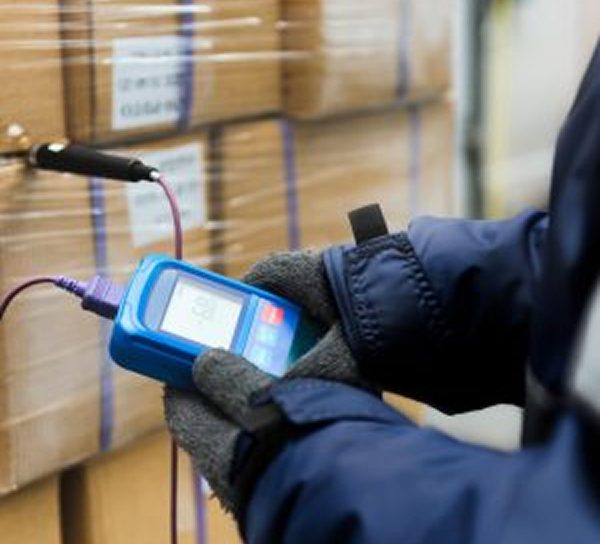
A person wearing blue gloves operates a measuring device for quality control on packaged cartons.

Food safety is not achieved solely through HACCP concepts, procedures, or checklists. What is crucial is that... Employees should recognize risks, take responsibility, and address problems openly.. This is precisely where a positive food safety culture comes into play.

Since the requirements were enshrined in Regulation (EC) No. 852/2004 and in standards such as IFS Food Version 8, BRCGS and FSSC 22000, companies have had to demonstrate that food safety is actively practiced. An effective culture not only strengthens product safety but also improves collaboration, increases accountability, and helps companies successfully pass audits.

About this training

All information on food safety culture basic training

The live online training lasts approximately 4 hours, including practical examples and a Q&A session. You will receive a comprehensive PDF handout, tried-and-tested templates, and a certificate of participation. The focus is on the practical implementation of a positive food safety culture. You will learn how legal and regulatory requirements can be integrated into daily business operations and which measures will sustainably raise awareness of the topic among employees and managers.

Safely implement requirements

You will learn about the requirements from Regulation (EC) No. 852/2004 as well as from IFS Food, BRCGS, FSSC 22000 and other standards and learn how these can be implemented in practice.

Effectively involving employees

You will receive concrete approaches on how to promote responsibility, communication and participation within the company in order to sustainably strengthen a positive food safety culture.

Use practical tools directly

Use templates, checklists and practical examples to efficiently plan, implement and further develop measures for a food safety culture.

A positive food safety culture is not created through documents, but through the daily behavior of all employees – supported by leadership, communication and lived responsibility.

Feedback from participants

""The training was very well organized overall and the content was very practical. The clear structure, the helpful materials, and the trainer's friendly and dedicated manner were particularly noteworthy. All in all, a very successful training course from which one can take away a lot for everyday work.""

Kathrin

21.11.2025 5.0 · verified

4,9

five small yellow star symbols on a transparent background
98 % Recommendation

In brief: Contents of the food safety culture training

  • 1 Basics: The meaning and goals of a positive food safety culture.
  • 2 Law & Standards: Requirements from Regulation (EC) No. 852/2004, IFS Food, BRCGS and FSSC 22000.
  • 3 Guide: Responsibility, role model function and management commitment.
  • 4 Communication: An open culture of learning from mistakes and effective information exchange.
  • 5 Employees: Raising awareness, participation and motivation.
  • 6 Tools: Cultural plan, employee survey and practical implementation aids.
  • 7 Practical examples & audits: Successful measures from food and packaging companies. Implementation in audits.
  • 8 Question round: Individual questions and exchange with the trainer.

Contents & Roadmap

Contents and topics of your basic training in food safety culture

The training includes a 4-hour live online training session, digital seminar materials, practical templates, and numerous examples from the food and packaging industries.

Yellow book symbol on a dark blue square background

01

Phase 01

Fundamentals of food safety culture

  • What does food safety culture mean and why is it important for food companies?
  • Interaction of behavior, leadership, communication and lived corporate values
  • Difference between formal requirements and actual food safety practices
  • Typical factors influencing food safety culture in everyday business

02

Phase 02

Legal and regulatory requirements

  • Classification of relevant legal requirements for food safety culture
  • Requirements and expectations from IFS Food, BRCGS and FSSC 22000
  • Responsibility of the company management and participating departments
  • Evidence and documentation for audits and internal assessments
Yellow chat bubble on a dark blue square background

03

Phase 03

Leadership and management commitment

  • Management's responsibility for food safety culture
  • Role model function of managers in everyday work
  • Clearly communicate expectations, responsibilities, and goals
  • Make food safety a visible leadership responsibility
Document-secured symbol in yellow on a dark blue square background

04

Phase 04

Communication and an open culture of learning from mistakes

  • Communicating food safety information in a way that is understandable and tailored to the target audience
  • Promote open communication about errors, risks, and potential for improvement.
  • Improve the flow of information between management, quality management, quality assurance and operational areas.
  • Selecting suitable communication channels for everyday business
Yellow tool icon on a dark blue square background

05

Phase 05

Raising awareness and involving employees

  • Raising employee awareness of their role in food safety
  • Promoting active participation and personal responsibility
  • Strengthen motivation through practical actions and training formats
  • Target different audiences and business units
Yellow speech bubble icon on a dark blue square background

06

Phase 06

Tools for practical implementation

  • Develop and utilize a cultural plan for a food safety culture
  • How to effectively prepare and evaluate employee surveys
  • Derive appropriate measures from the results
  • Integrate practical implementation aids into existing QM and operational processes
Yellow document icon on a dark blue square background

07

Phase 07

Practical examples and implementation in audits

  • Learn about successful measures from food and packaging companies
  • Jointly evaluate practical examples for strengthening food safety culture
  • Classifying suitable evidence and measures for audits
  • Demonstrate the implementation and effectiveness of the food safety culture in a comprehensible manner during the audit.
Yellow document icon on a dark blue square background

08

Phase 08

Q&A session and individual practical application

  • Discuss individual questions from the participants
  • Classifying specific challenges from everyday business life
  • Discussing experiences and solutions together
  • Deriving next steps for your own food safety culture

Your trainers

Your experts for food safety culture basics

Benefit from our many years of practical experience in the food industry, as well as from training courses, consulting projects, and audits. Our trainers combine the requirements of legislation and certification standards with tried-and-tested methods to sustainably establish a positive food safety culture within your company.

Jennifer, wearing a dark blazer and glasses, stands with her arms crossed in front of her chest in front of a light-colored wall.

OWNER

Jennifer Ziegler

Owner · Subject matter expert

20+ years of experience

Jennifer Ziegler is an experienced trainer and consultant in the field of food safety culture. She supports companies in establishing, developing, and embedding a practical food safety culture in their daily work. Her focus is on clear communication, actionable measures, and the active involvement of employees.

Portrait of Aniko Koch wearing glasses, a light blouse and a dark blazer in front of a light wall.

EXPERT

Aniko Koch

Trainer & Consultant

20+ years of experience

Aniko Koch is an experienced practitioner in the field of food safety culture. For many years, she led a food safety culture (LMSK) group within her company and oversaw numerous initiatives and activities aimed at strengthening this culture. Her focus is on practical implementation and actively involving employees.

Upcoming Events

Live online appointments

Each session takes place in one day — including training materials, checklist and certificate.

format

Live online

Next appointment: on request

450,00  plus VAT.

October 28, 2026

On-line 9:00 AM – 1:00 PM Available

January 27, 2027

On-line 9:00 AM – 1:00 PM Available

More dates to follow

On-line 9:00 AM – 1:00 PM Available

This is how it works

From registration to secure implementation — in four steps.

Inquiry

Send us your non-binding inquiry. Together we will clarify your requirements, the desired number of participants and possible topics.

Scheduling an appointment

We will arrange a suitable training date together and, if necessary, tailor the content to your questions or products. You will also receive the training materials in PDF format in advance.

training

They participate in the training day via Zoom (browser application without download) — interactively.

certificate

You will receive your certificate of participation as proof of expertise and, if applicable, further information on the topic.

All reviews

Verified reviews from former participants.

Data collected anonymously after completion of training — sorted by date.

FAQ

Frequently asked questions about our advanced training course on food safety culture

The training is aimed at specialists and managers from food and packaging companies who want to establish, further develop or demonstrate a positive food safety culture in an audit.

Yes. The training is also suitable for packaging manufacturers who want to establish a product safety culture. The content can be applied to responsibility, communication, behavior, documentation, and continuous improvement within the management system.

This training is designed as a basic course and is therefore very suitable for beginners. For more experienced participants, we recommend the Advanced Food Safety Culture Training

The training takes into account the requirements of Regulation (EC) No 852/2004, IFS Food Version 8, BRCGS, FSSC 22000 as well as further requirements for an effective Food Safety Culture.

The training covers a total of Hours and takes place as a live online training.
In-house training on-site is also possible for companies.

Yes, the training takes place as Live online training Instead, you participate interactively and can ask questions during the training.

Yes. You will receive training materials as PDFs as well as templates.

Yes. After participation you will receive a Certificate of participation as proof of your further training.

Yes. For companies, we also offer the training as in-house training by arrangement – online or on site, adapted to your products, processes and questions.

You might also like this

Suitable training courses for your team

BESTSELLER
4.9

Internal auditor — IFS / BRCGS

For QM, QS, auditors

Conduct and document internal audits independently.

1 day · 7 hours
Live online
HACCP
4.9

HACCP basics

Quality Management, Employees

Identify hazards, define CCPs, and secure processes.

1 day · 6.5 hours
Live online
certificate
4.9

HACCP Officer:

For those in charge

Establish, maintain and professionally manage HACCP systems.

2 sessions · 8 hours
Live online

Develop a food safety culture that is lived in everyday life.

Secure your spot — or let us design your in-house program.

We offer a free 15-minute consultation — and will tell you honestly whether this training is right for your company.

Shopping Basket

Should the following booking form be blocked by your firewall, you can easily make your booking via email.
We look forward to reading or hearing from you: 📩 E-mail: info@praxistrainings-LMS.de, 📞 Phone: +4951527800574