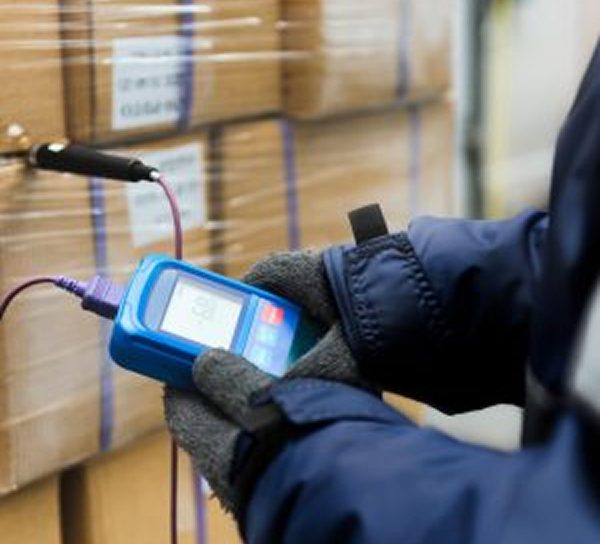
Training in pre-crisis management in the food industry

3.5 hours · Live online training · Max. 12 participants · Certificate of participation · Invoice


Training in Strategic Pre-Crisis Management – Identifying Risks, Avoiding Escalations (online):

In In this online training you will learn, risks in the food industry at an early stage recognize, based on evaluate and structured to steer – before any returns or recalls occur. The content is based on the requirements of IFS Food, IFS Broker, BRCGS and FSSC 22000 and combines legal basis with practical decision logic.

  • Strategically – with a clear escalation and decision-making logic
  • practical – with realistic scenarios from the industrial, media and supply chain context
  • With practical trainers – with many years of experience in quality management and crisis prevention


only 450 € plus VAT

Strategic pre-crisis management: How to prevent crises before they arise

The training course "Pre-Crisis Management in the Food Industry" teaches you how to identify risks early, assess them thoroughly, and manage them effectively. The goal is to prevent crises from arising in the first place and to systematically avoid recalls. HACCP prevents risks from developing during the process; pre-crisis management regulates the assessment and control of critical deviations before they escalate into a crisis.

This training is aimed at companies that want to sustainably improve their preventive crisis management in the food sector, their risk analysis in the food company and their processes for food recall prevention.

Professional crisis management means not just reacting – but acting proactively.

Crises rarely arise suddenly. In most cases, they develop from small deviations that are misjudged or escalated too late.

A structured Pre-crisis management in the food industry ensures that:

  • Risks are identified early
  • Decisions must be made on a sound basis
  • Escalations should be avoided
  • Recalls can be prevented

You will learn how to safely assess critical situations and intervene early.

The content combines legal principles, toxicological assessment and practical decision-making logic – oriented towards the requirements of: IFS, BRCGS, FSSC 22000, EU Basic Regulation (Art. 14 & 19).

Our crisis management training is:

Book now:

  • 3.5 hours of online training 
  • Requirements from laws and standards
  • practical implementation in the company

Next available date:

Booking for companies:

only 450 €

Training content: Pre-crisis management

1. Identify risks early – figures, data, facts

You will learn how to systematically identify and assess risks.

  • Typical main risks for food distributors
  • Contaminants, residues, foreign bodies – clear distinction between terms
  • Keep an eye on early warning systems and regulatory developments
  • Risk assessment based on toxicological parameters (e.g. ADI, ARfD)

Goal: To identify risks before they become critical.

2. Legal basics, compact and practical

They understand the legal requirements for risk management in the food industry.

  • Regulation (EC) No. 178/2002 (Art. 14 & 19)
  • Food and Feed Code (LFGB)
  • Maximum residue limits Regulation (396/2005)
  • Contaminants Regulation (EU 2023/915)
  • Regulation (EC) 2073/2005 (microbiological criteria)
  • Information and reporting obligations towards authorities and certifiers

Goal: You act in a legally compliant manner and avoid making wrong decisions.

3. Complaint ≠ Recall

Not every deviation warrants a recall. We consider: 

  • Microbiological findings
  • Labeling defects
  • foreign body
  • Exceedances of limit values

Decision logic:

  • Is there a health risk?
  • Is there any deception involved?
  • Is the product not marketable?
  • Traffic ban, withdrawal or recall?
  • Risk-based overall assessment

Exercise: Evaluation of a realistic case study

4. Mastering interactions with authorities with confidence

You will learn how to communicate with authorities professionally and securely.

  • Preparation in "quiet times"„
  • Typical process of contacting a government agency
  • Rights and obligations of the company
  • Do's and Don'ts for First Contact
  • Internal and external communication strategy
  • Dealing with time pressure

Goal: You maintain control and avoid unnecessary escalations.

5. Workshop: A critical case?

You apply your knowledge directly. In groups, you work on a realistic scenario, e.g.:

  • Detection of a pesticide residue
  • Undeclared ingredient
  • Industrial customer complaint

Task:

  • Assess risk
  • Define action
  • Preparing communication with authorities or customers
  • Provide a professional justification for the decision

Goal: To translate theory into practical, confident action.

A notice:
The training can be combined with the Crisis management training Both formats can be booked individually or as an in-depth and discounted complete package.

Book this training course and the crisis management training course together conveniently., for €799 plus VAT::

Benefits of our online training on pre-crisis management

By experts

Experienced practical trainers impart sound knowledge

Small groups

A maximum of 12 participants allows for intensive exchange.

On-line

Flexible participation without travel expenses.

documents

All content is provided as a PDF for direct application.

For groups*

Individual offers for the entire team.

company

In-house training is available upon request.

* For groups: Sign up below info@praxistrainings-lms.deto receive an individual offer.
** For companies: We also offer our training courses in-house by arrangement. Request to: info@praxistrainings-lms.de

Target group of the training course on pre-crisis management

This training is particularly suitable for specialists and managers responsible for food safety, quality, and risk management in the food industry. It is especially relevant for individuals who make decisions in critical situations or who establish and develop preventative structures within their company. Participants will particularly benefit if they wish to professionalize existing processes in the areas of crisis prevention, risk assessment, and recall avoidance.

This training is aimed particularly at:

  • Experienced crisis managers
  • QM management
  • Food safety officers
  • Management with strategic responsibility
  • Participants of the "Crisis Management" module„

This module is suitable both as an advanced training course for experienced managers and as a follow-up training course after the basic module.

Benefits of pre-crisis management training

Structured pre-crisis management gives you a clear advantage when dealing with risks and uncertain decision-making situations. You develop a sound basis for decision-making, reduce escalations, and strengthen your company's ability to act. The training provides you with practical methods for identifying, assessing, and effectively managing risks early on.

✔️ Strategic view of crisis prevention
✔️ Safety in border and grey areas
✔️ Sound decision architecture
✔️ Standards-compliant and legally sound assessment of complex situations
✔️ Strengthening entrepreneurial capacity
✔️ Sustainable reduction of recall risks

What is pre-crisis management in the food industry?

Pre-crisis management in the food industry encompasses all strategic and operational measures that companies can take. Identify, assess, and manage risks early on., before a crisis develops. The focus is not on reacting to a product recall, but on preventing it. Effective preventative crisis management ensures that potential food safety risks are identified early and thoroughly assessed.

This creates the foundation for companies to to make safe decisions, comply with legal requirements and minimize economic damage. At the same time, a functioning crisis prevention system strengthens internal capabilities and reduces the likelihood of escalations along the entire supply chain.

Difference between crisis management and pre-crisis management

Crisis management and pre-crisis management follow different approaches, but they are intertwined. Classic crisis management comes into play when a critical situation has already occurred, such as a product recall or an acute health hazard. The goal is to react quickly, limit damage, and maintain control.

Pre-crisis management, on the other hand, begins much earlier. It focuses on the systematic evaluation of deviations, risks, and suspected cases before they escalate. Through clear decision-making logics, defined evaluation criteria, and structured processes, it prevents a complaint from becoming a crisis. Companies that combine both approaches are significantly more resilient and better prepared for critical situations.

Typical causes of food crises

Food crises rarely happen by chance. In most cases, they are the result of Result of inadequate risk assessment or faulty decisions in early stages. Common causes include, for example, microbiological contamination, undeclared allergens, foreign bodies or exceedances of legal limits. Similarly, incorrect labeling or problems in the Supply chain trigger a crisis.

The situation becomes particularly critical when companies recognize risks but misjudge them or react too late. Unclear responsibilities, lack of decision-making structures, or inadequate communication This problem is further exacerbated. A structured pre-crisis management approach addresses precisely these weaknesses and creates clear processes for reliable assessment and control.

Training-Microbiology-Biofilm

Importance of early warning systems and risk analyses

Early warning systems and sound risk analyses are key elements of effective preventive crisis management in the food industry. They make it possible to obtain relevant data from Quality assurance, to systematically evaluate laboratory analyses, complaints or supply chains and to identify early indications of potential risks.

Based on this information, companies can make informed decisions before an escalation occurs. A structured risk analysis helps in this regard., to realistically assess health risks and derive appropriate measures.. This not only helps avoid recalls, but also allows for targeted improvement of internal processes and the food safety Strengthen in the long term.

Frequently asked questions about crisis management training

  • An appointment lasting approximately 3.5 hours (including breaks)
  • Important: Ensure an interference-free environment and stable Internet access from the PC. Camera and headset are required.

After completing the training, you will receive a certificate for successful participation in the Pre-Crisis Management training.

Book directly through this website or ask one Booking on account among info@praxistrainings-lms.de on.

If you would like to book the training for several people, please send us an email info@praxistrainings-lms.de. We are also happy to offer the training as an in-house training course.

Pre-crisis management encompasses all measures that companies take to identify and assess risks before a crisis occurs. The goal is to avoid recalls and ensure food safety.

Through structured risk management in the food industry, clear decision-making processes, functioning early warning systems and regular evaluation of deviations.

Early warning systems help to identify risks early and to initiate measures before an escalation occurs.

A recall is required if a product poses a health risk and has already been distributed to consumers.

Companies must comply in particular with the EU basic regulation as well as national regulations and ensure that no unsafe food products are placed on the market.

Risk assessment is central to decisions in quality management. It determines whether measures are necessary and how quickly a response is required.

The training is suitable for specialists and managers who are responsible for food safety, quality or crisis prevention.

Your experts for pre-crisis management

Practical Training LMS - Trainer for MOSH-MOAH at Practical Training LMS: Claus-Michael Brieber

Claus-Michael Brieber

Senior LMS Expert

Dipl.-Ing. Claus-Michael Brieber is an experienced food technologist specializing in food safety, contaminants, residues and has held senior positions in large companies for many years.

Make a booking: Individually or for multiple people / Training courses

Would you like to book on account as a company? No problem!

Reviews

There are no reviews yet.

Be the first to review “Schulung Prä-Krisenmanagement in der Lebensmittelindustrie”

Your email address will not be published. Required fields are marked *

Shopping Basket
en_GBEN

Should the following booking form be blocked by your firewall, you can easily make your booking via email.
We look forward to hearing from you: 📩 E-mail: info@praxistrainings-lms.de, 📞 Phone: +4951527800574