QM, AI & Improvements

crisis management

FOOD, PACKAGING MATERIALS, DIETARY SUPPLEMENTS, HPC

Crisis management training for the food industry — prepared for an emergency

Learn how to systematically assess crises in food companies, manage them effectively, and document them in accordance with audit requirements. This live online training provides a practical overview of crisis management, product withdrawal, recalls, reporting obligations, and requirements from IFS, BRCGS, and FSSC 22000.

1 x 4 hours.

Max. 12 participants

Live online

certificate

A smiling seminar leader sits with her team at a workstation with process diagrams and laptops.

Crisis Management Training — Preparation for Crisis Teams

What constitutes a crisis in a food company? When does a deviation become a recall? And how do you make clear, legally sound, and auditable decisions under time pressure?

This training course on crisis management in the food industry will answer these and other questions. Product recalls are rarely planned. When a health risk, labeling error, contamination, or suspected case arises, those responsible must quickly assess, decide, and communicate. In this training, you will learn how to establish an effective crisis management system, identify crises early, and manage withdrawals or recalls in a structured manner. We will examine requirements from IFS Food, IFS Broker, BRCGS, and FSSC 22000, as well as legal principles and typical practical scenarios.

Applicable

You will receive clear decision-making logic for crises, withdrawals and recalls.

practical

They work with case studies from the food industry, packaging and supply chain.

Standard compliant

You will learn to understand and classify requirements from IFS, BRCGS and FSSC 22000.

Advantages of crisis management training.

From experts

Practical trainers

Small groups

Maximum 12 participants

On-line

Without travel times

documents

Directly as PDF

For groups*

special conditions

For businesses**

Customizable**​

** For businesses: We also offer our training courses in-house upon request. Please contact us for further information. info@praxistrainings-LMS.de.

* For groups: Sign up below info@praxistrainings-LMS.deto receive an individual offer.

background

Why is crisis management training useful?

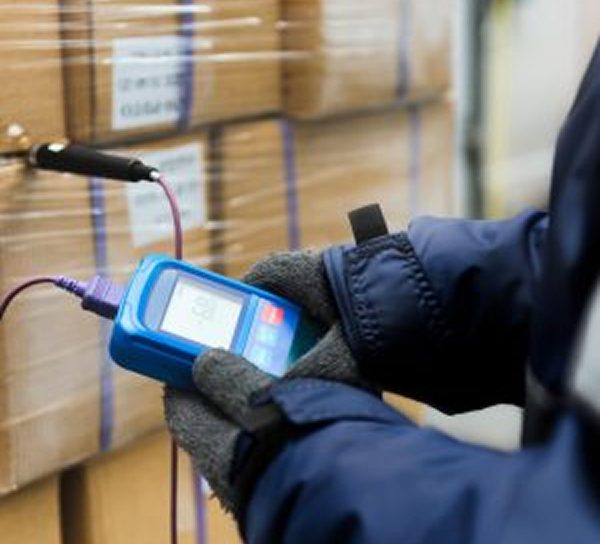
A person wearing blue gloves operates a measuring device for quality control on packaged cartons.

Crises in the food industry often arise under high pressure. Time pressureA microbiological finding, a foreign body discovery, an undeclared allergen, a labeling error, or a suspicion from the supply chain can require quick decisions. Companies must then assess whether products need to be blocked, withdrawn, or recalled.

In practice, companies rarely fail simply because they lack processes. Problems often arise from... unclear responsibilities, uncertain risk assessments, lack of escalation criteria, or incomplete communication. This is precisely where the training begins.

You will learn how to Recognizing crises earlier, decisions document in a comprehensible manner and Requirements from standards and legislation into a functioning Crisis management system transferred. The goal is to remain capable of acting in an emergency., to protect consumers and To limit damage to the company, brand and supply chain.

About this training

All information about crisis management training in the food industry

The training course on crisis management in the food industry lasts approximately 4 hours, including breaks, and takes place live online. You will receive a concise overview of requirements, decision-making structures, and typical processes in crisis and recall management. The focus is on practical questions: When does a crisis exist? How is a suspected case assessed? Who belongs on the crisis team? When is a withdrawal or recall necessary? How are authorities, customers, certification bodies, and the public informed? And how do you document decisions so that they are traceable during an audit?

Clear decision logic

They learn to assess suspected cases, deviations, and potential crises in a structured manner.

Security in recall management

They understand the difference between a return and a recall and know which steps are important in an emergency.

Auditable implementation

You will learn how crisis plans, crisis teams, traceability, communication, and recall drills can be documented and reviewed.

Crisis management is not just about reacting in an emergency. A good system creates clarity even before a crisis: who decides, who provides information, what is documented, and when escalation is necessary.

Editor's Recommendation

Participants in our specialist training courses particularly appreciate the understandable presentation, the practical examples and the opportunity to contribute their own questions from the company.

January 30, 2025
5.0 · verified

4,9

98 % Recommendation

In short: This crisis management training covers the following topics:

  • 1Understanding of crises: Definition of crisis, suspected case, escalation, withdrawal and recall.
  • 2Standards: Classify requirements from IFS Food, IFS Broker, BRCGS and FSSC 22000.
  • 3Legal basis: Understand obligations regarding product safety, information, returns and recalls.
  • 4Crisis team: Define roles, responsibilities, and decision-making processes in case of emergency.
  • 5Risk assessment: Structured assessment of suspected cases, health risks and escalation criteria.
  • 6Communication: Manage internal and external communication with authorities, customers, retailers and certification bodies.
  • 7Traceability: Organize batch separation, product blocking and recall logic in a traceable manner.
  • 8Improvement: Evaluate crises, analyze causes, and derive corrective measures.

Contents & Roadmap

Content and topics of your crisis management training.

The training includes a 4-hour live online training, Training materials as PDF handouts, practical examples, workshop elements and templates for crisis management - e.g., procedures, emails and contact lists.

01

Phase 01

Introduction: Classifying crisis management

  • What is considered a crisis in a food company
  • Difference between deviation, suspected case, withdrawal and recall
  • Typical crisis triggers: microbiology, allergens, foreign bodies, labeling and supply chain
  • Objectives of an effective crisis management system

02

Phase 02

Understanding requirements from standards and law

  • Requirements from IFS Food, IFS Broker, BRCGS and FSSC 22000
  • Legal obligations regarding unsafe food
  • Role of authorities, customers and certification bodies
  • Documentation and verification obligations in the audit
Yellow chat bubble on a dark blue square background

03

Phase 03

Establish crisis organization and decision-making processes

  • Establishment of a crisis team and appointment of deputies
  • Define escalation criteria and decision points
  • Structuring crisis plans, contact lists and communication channels
  • Clarify leadership tasks in a crisis
Document-secured symbol in yellow on a dark blue square background

04

Phase 04

Early detection and risk assessment

  • Identify and assess suspected cases
  • Assess health risks and potential impacts
  • Decide: observe, block, escalate, or call back.
  • Document the initial assessment in a comprehensible manner.
Yellow tool icon on a dark blue square background

05

Phase 05

Acute crisis phase and recall management

  • Clearly distinguish between a return and a recall
  • Controlling product blocking, batch separation and traceability
  • Organize reporting channels and communication with relevant bodies
  • Coordinate and document measures under time pressure
Yellow speech bubble icon on a dark blue square background

06

Phase 06

Stabilization, evaluation and improvement

  • Communication with customers, retailers, authorities and the public
  • Collaboration within the crisis team during the ongoing assessment
  • Root Cause Analysis and Derivation of Corrective Measures
  • Recall drills, management review and system improvement

Your trainers

Your expert for crisis management

Benefit from practical experience in food safety, consulting, training, and crisis management. The training combines requirements from standards and legislation with concrete case studies and clear decision-making structures for emergencies.

Portrait of a female expert in business attire with glasses and folded arms against a light background.

OWNER

Jennifer Ziegler

Trainer & Consultant

20+ years of experience

Jennifer Ziegler supports companies in the practical implementation of HACCP, hygiene, and quality management requirements. Her focus is on clear communication, interaction, and the transfer of requirements into everyday business operations.

Portrait of Aniko Koch wearing glasses, a light blouse and a dark blazer in front of a light wall.

EXPERT

Aniko Koch

Trainer & Consultant

20+ years of experience

Aniko Koch has many years of experience in food safety and quality management. In her training, she teaches crisis management in a practical and understandable way, using numerous examples from her auditing and consulting practice.

Upcoming Events

Live online events 2026

Dates — including training materials, interactive exercises, templates and certificate.

September 2, 2026

On-line 9:00 AM – 1:00 PM Available

November 30, 2026

On-line 9:00 AM – 1:00 PM Available

More dates to follow

On-line 9:00 AM – 1:00 PM

This is how it works

From registration to crisis preparedness — in four steps.

register

Choose a live online appointment. Registration takes less than 2 minutes.

preparation

You will receive the training handout in advance via email.

training

Theory and practice are closely intertwined.

Final test & certificate

Recognized certificate, possibly further documents for practical use.

All reviews

Verified reviews from former participants.

Data collected anonymously after completion of training — sorted by date.

FAQ

Frequently asked questions about our crisis management training

The training is aimed at quality managers, QS staff, HACCP team members, IFS, BRCGS and FSSC officers, managers and members of crisis teams in food, packaging and trading companies.

Food companies and companies in the food supply chain should have clear structures in place to assess and escalate safety-related incidents and to initiate appropriate measures. Standards such as IFS, BRCGS, and FSSC 22000 require a transparent and traceable crisis management system.

Topics covered include crisis definition, requirements from standards and law, crisis team, escalation criteria, withdrawal, recall, traceability, communication, documentation and improvement after the crisis.

During a recall, products are removed from the supply chain before they reach consumers.have reached the inside. A recall affects products that have already been delivered to consumers.were handed in or may have been handed in inside.

The training lasts approximately 4 hours including breaks.

Yes. You will receive training materials as a PDF. You will also receive templates for your crisis management.

Yes. For companies, we also offer the training as in-house training by arrangement – online or on site, adapted to location, processes and questions.

Yes, you will receive one Certificate for successful participation in the course “Crisis Management”.

format

Live online

Next date: September 2nd

450,00  plus VAT.

Combo offer

Combo offer

Book both training courses together and secure a discounted price.

This training can be combined with the Pre-crisis management training This can be booked. You will receive two coordinated live online training courses as an in-depth complete package at a reduced total price.

  • Two training courses in one package
  • In-depth content with direct practical relevance
  • Discounted price instead of individual booking
Combo package
799 €
net plus VAT.
Book both training courses

You might also like this

Suitable training courses for your team

BESTSELLER
4.9

IFS Officer

For QM, QS, auditors

Know and implement IFS requirements within the company.

1 day · 6.5 hours
Live online
HACCP
4.9

HACCP basics

QM, QS, HACCP team members

Identify hazards, define oPRPs and CCPs, and secure processes.

1 day · 6.5 hours
Live online
certificate
4.9

HACCP Officer:

For those in charge

Establish, maintain and professionally manage HACCP systems.

2 half days · 8 hours
Live online

READY TO MANAGE CRISIS MANAGEMENT AND RECALL PROCESSES MORE SECURELY?

Secure your spot — or let us design your in-house program.

We offer a free 15-minute consultation — and will tell you honestly whether this training is right for your company.

Shopping Basket
en_GB

Should the following booking form be blocked by your firewall, you can easily make your booking via email.
We look forward to reading or hearing from you: 📩 E-mail: info@praxistrainings-LMS.de, 📞 Phone: +4951527800574